CZ Sharp-tail Review after Four Seasons

My CZ Sharp-tail 28ga shotgun, nestled between a daily limit of Montana Sharp-tailed grouse.
The CZ Sharp-tail SxS is the baseline, or “control,” of my “In Pursuit of Bespoke” journey.
If my bird gun ever finds itself on a used gun rack, many a prospective buyer will have a wary eye, contending that a gun in such condition must not have been very well taken care of, and could be something of a liability of a purchase. It is littered with dings and scratches; the case coloring on the faux sideplates is largely muted now, and the bluing is faded at the breech. It’s been dropped in the mud and it’s fallen off the truck more times than I’d like to admit.
But for the last four years, this Sharp-tail has killed pointed Sharp-tails in Montana and South Dakota; Ring-necked roosters in Montana, South Dakota, Minnesota, and Kansas; Chukar and Gray partridge in Montana and Wyoming; Prairie grouse in South Dakota; Bobwhite quail in Kansas; and Gambel’s quail in New Mexico. By a conservative estimate, by counting the spent hulls I’ve saved for reloading, this gun has been discharged well over 2,000 times and it has never failed to fire when swung on game.
The most distinct marks, however, weren’t earned on Wyoming rimrock or deep in a Montana coulee. They were earned on a hot summer day, here at home, when a two-month old puppy couldn’t help himself but seek to answer, “what does Turkish walnut taste like?” The divots aren’t noticeable at distance, but when I run my fingers across the stock as if I were reading braille, I can’t help but smile and think of Aldo.
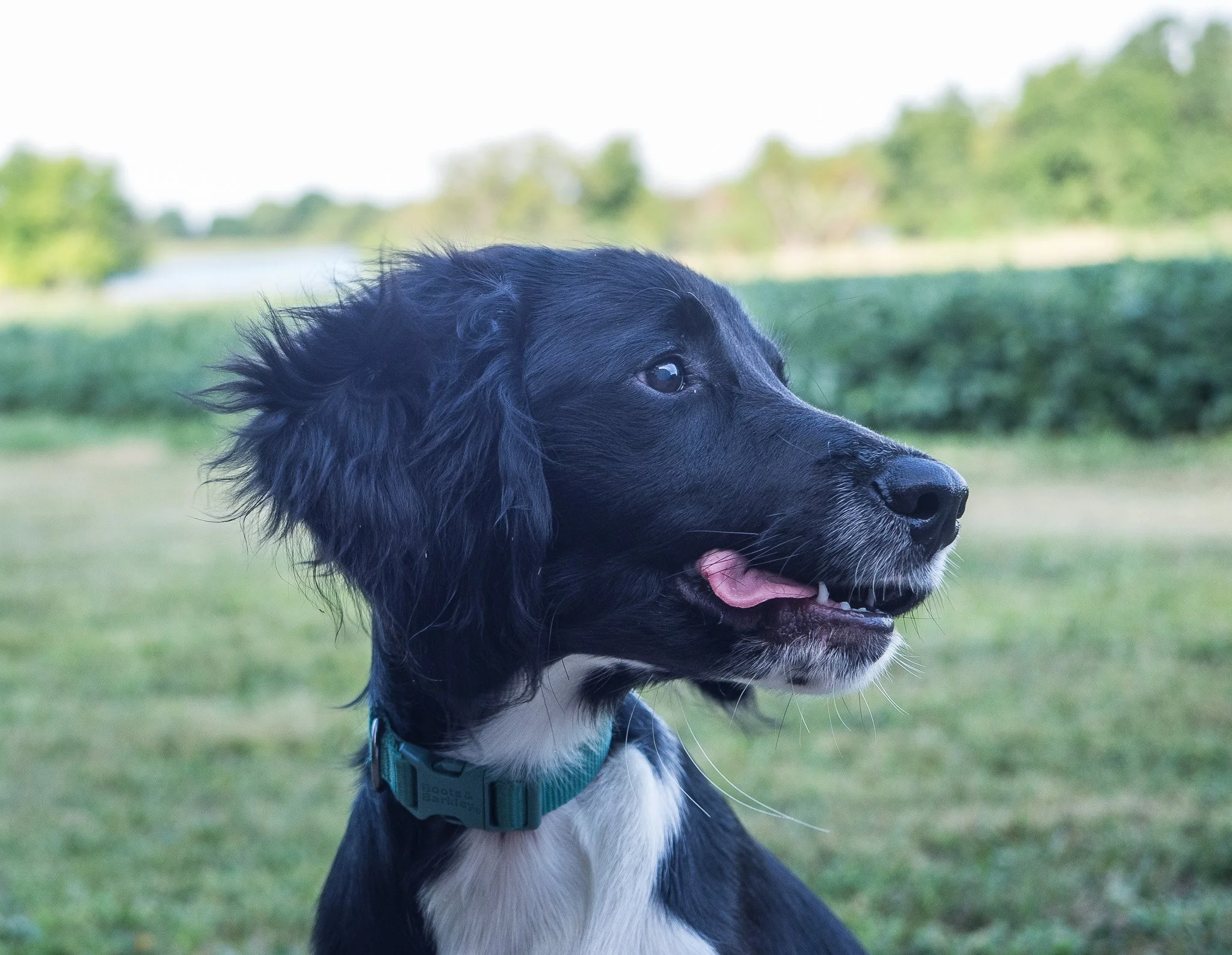
Aldo about the age when his dagger-like puppy teeth took a bite out of the stock of my CZ Sharp-tail shotgun.
Technical specifics of a 28ga CZ Sharp-Tail
Forend - Semi-beavertail
Stock - Prince of Wales
Triggers - Single selective
Rib - Raised
Chokes - Flush Huglu (which I have replaced with Carlson’s after doing some pattern testing)
Ejector/Extractor - Extractor
Chamber - 3”
Weight - 5.9lbs*
Barrel Length - 28”
LOP - 14.5”
* Note that this is the weight of the 28ga variant.
From Muzzle to Stock
The Sharp-tail comes with five, flush, interchangeable chokes. After extensive choke tube and pattern testing, I elected to swap those with after-market Carlson’s extended choke tubes. CZ does not have anything published regarding the gun’s Point of Aim / Point of Impact pattern, but I’ve personally observed (with Improved Cylinder at 25 yards) what appears to be a a 55/45 or 60/40 split, where much of the pattern is thrown slightly higher than its point of aim. That’s not uncommon with a sporting gun intended to be used for trap or skeet, and, in fact, such a pattern can be preferred on a field gun to account for the rise of a bird, but many field guns today are manufactured with a 50/50 pattern (Benelli’s Super Black Eagle being a key exception). I can not definitively claim all Sharp-tails pattern this way, but I felt that it was worth noting here.
Above the chokes, there is a single bead mounted on a solid, flat rib. There used to be a white ball embedded in the bead post, but I knocked that loose in the tall grass long ago. A round of clays, or an action-packed morning of dove hunting, may have the shooter wanting for the barrel-cooling benefits of ventilated rib, but the semi-beavertail forend is something of a saving grace on the non-firing hand when the barrels get a bit warm.
The 28 gauge model is chambered to accept 3” shells. Shooter be warned, those 3” shells pack quite a bit more punch than their 2 ¾” counterparts. It’s not uncomfortable, but the gun’s overall weight is at 5.9 pounds, and the heavier charge in a 3” field load shell is certainly felt. Michael McIntosh, in his book Shotguns & Shooting, mentions that the optimal balance between a gun’s weight and the shot charge it fires is ninety-six times heavier than the shot load. By that British gunmaker math, this 5.9 pound gun (94.4oz) is well suited for loads just under 1 oz (0.98oz. to be exact).
There are a few 1 oz 2 ¾” field loads from Federal Premium, but most of the 28 gauge loads that come in 3” hulls are 1 oz or heavier, so even though the chamber accepts a 3” shell, it may not be necessary or even ideal. It’s nice to have the flexibility, and I’ve even bagged a few birds with “magnum” 3” loads, but I’m not convinced the extra cost for the ammunition, louder report, and more robust kick outweighs the benefit - particularly when a quick follow-up shot from the second barrel is needed, shooting a load whose recoil aligns with the gun’s overall weight is advantageous.
While many modern doubles are expected to come with automatic ejectors, the Sharp-tail features simple extractors. For the high-volume clay shooter, this might be a point of contention. But afield, I find them a courtesy; they allow me to pluck a warm hull from the breech rather than hunting for spent plastic in the tall grass. For someone who saves hulls for the reloading bench, it’s a feature of convenience rather than a cost-cutting measure.
That same philosophy of measured utility extends to the CNC-machined one-piece receiver, along with the floating firing pins and coil-spring hammers. These mechanical enhancements distinguish the Sharp-tail from its now discontinued CZ side-by-side predecessor, the Ringneck, and while my perspective is admittedly centered on this single experience (I haven’t carried any other shotgun nearly as far as this one), after four seasons of hard use, these features have proven to be more than just marketing copy.
Traditionally, the single trigger, which is what the Sharp-tail has, is more mechanically complex, thus more likely to fail. When considering the price point of a Sharp-tail in contrast to other modern side-by-sides with single triggers, like a FAIR Iside that’s nearly four times the price, there could be a question as to the longevity of such a mechanism, but again, 2,000+ shells and hundreds of miles later, the CZ’s trigger has proven to be reliable. I’m sure there are more refined triggers but there’s something to be said for one that always does its job.
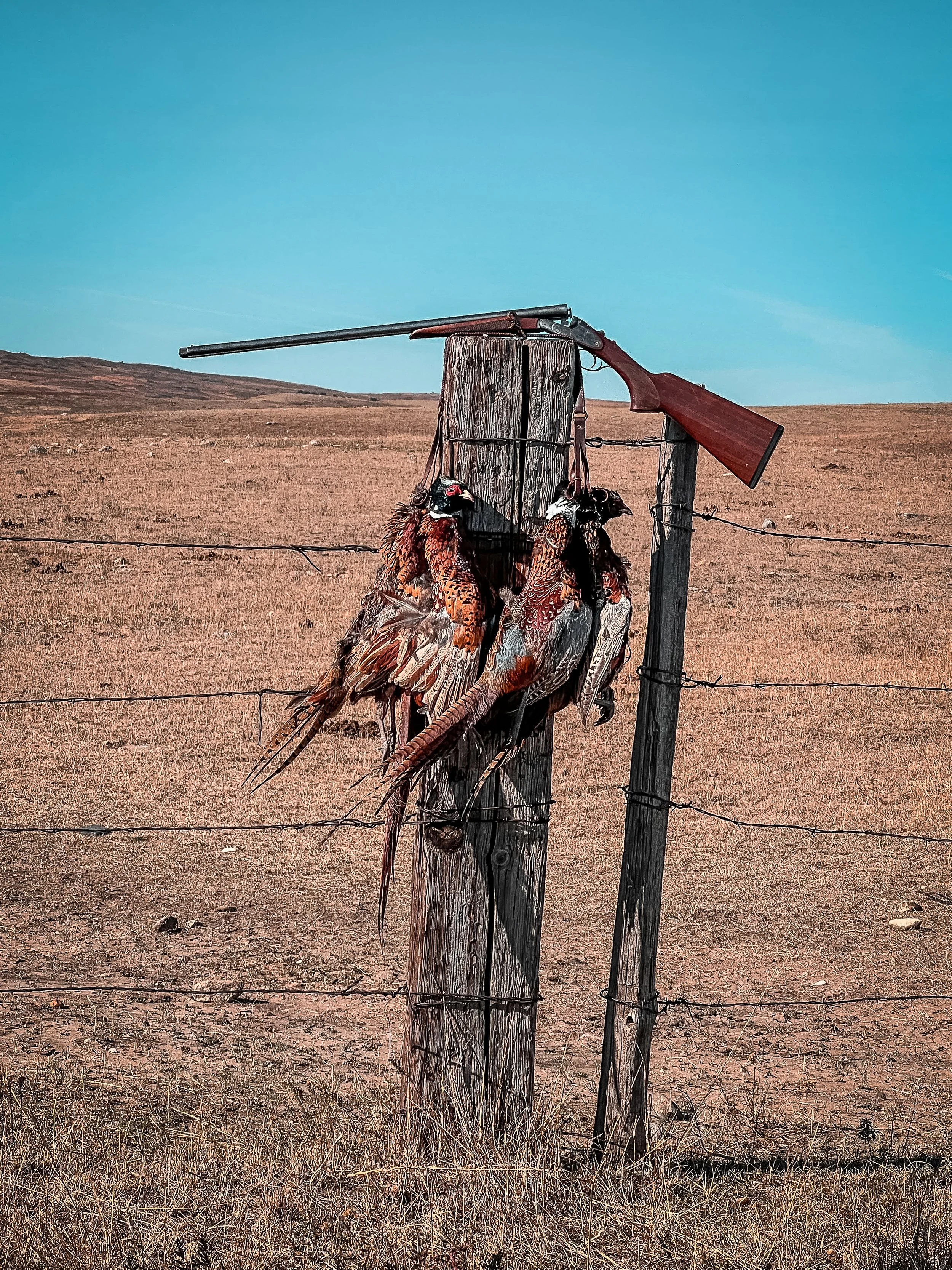
The wood may be unremarkable, and the sideplates just for show, but there’s no denying that this gun has held up its end of the bargain.
The gun’s case-hardened sideplates are ornamental, and much of the case-hardening has been tempered from the oils and sweat of my palm, but I don’t mind. Just like the burnished blueing on the breech, it is a visual ledger of miles traveled. The sideplate’s screws are tuned with some light filigree, and the “Sharp-tail” engraving on the bottom of the action bar is a tasteful touch. I’ve always been enamored by elaborate game scenes on the side of a shotgun, and I hope to one day carry a bespoke gun with Aldo’s portrait engraved in the steel, but until then, I appreciate the quiet intentionality of the Sharp-tail’s presentation.
And finally, we have arrived at the stock. It’s Turkish walnut, with a Prince of Wales grip that offers a more natural, swept-back angle for the wrist than a pistol grip. At the rear sits something of a “Goldilocks” rubber butt plate - it provides enough friction to stay seated in the shoulder, yet slick enough to never snag on a vest during a fast mount. The wood on the Sharp-tail, both the stock and the forend, seems to collect dings and scratches with an almost eager frequency. Perhaps the finish is a bit soft, or perhaps that’s simply the trade-off at this price point.
It’s a Ledger and a Workhorse
It’s no secret that I’d like to carry a bespoke shotgun afield. Something that’s been built from the ground up with my dimensions, physiology, and preferences in mind. I often catch myself daydreaming of taking a trip to London to tour the gun rooms of Holland & Holland, James Purdey & Sons, and Boss & Co and adding my name to one of their historic gun ledgers.
Four seasons, hundreds of miles, and thousands of shells later, the CZ Sharp-tail has proven itself to be a ledger of a different sort. While the London makers keep their records in leather-bound volumes in a climate-controlled vault, this gun carries its history in its patina.
The thinning bluing is a record of every mile I’ve carried it at the balance point; the silvered sideplates are a testament to the sweat of a dozen states; and those tooth marks in the Turkish walnut are a permanent entry from the summer Aldo became a bird dog.
As I drift back to reality and run my fingers over those marks, I smile. Because as much as I might like to have one of “London’s best,” my life is not defined by material possessions, nor do the birds know the difference between a $1,000 or a $100,000 shotgun. What matters is that when Aldo locks on point, there’s no question in my mind that the tool in my hand will do the job I’ve asked of it.

“Ounces make pounds” was a saying hammered into my head from years of packing a ruck sack. The CZ Sharp-tail’s 5.9lbs makes for a dream to carry when climbing in and out of Wyoming rim rock while still being heavy enough to accommodate the recoil of ¾ oz - 1 oz field loads.