My One-Eyed Bird Dog: A $7,500 Lesson in Field Injuries and Rex Specs
My wife kicked us out of the house on Christmas Eve, 2022.
No negotiation. No appeal.
With family arriving in just a few hours and the house reaching a state of holiday perfection, she made it clear: Aldo and I were a liability to the preparations. So, being the exceptional husband that I am, I grabbed a shotgun and went hunting.
Aldo and I drove an hour outside of town to a small parcel of state-managed ground that was something of a rabbit stronghold. There might be quail, too, but I wasn’t going to count on it.
A dusting of snow that morning set the conditions. For Aldo, it was about as close to divine favor as the prairie can offer. Cold air slows the evaporation of scent molecules, while the moisture traps them close to the ground. It was as if the Almighty himself had blessed this Christmas Eve exile.
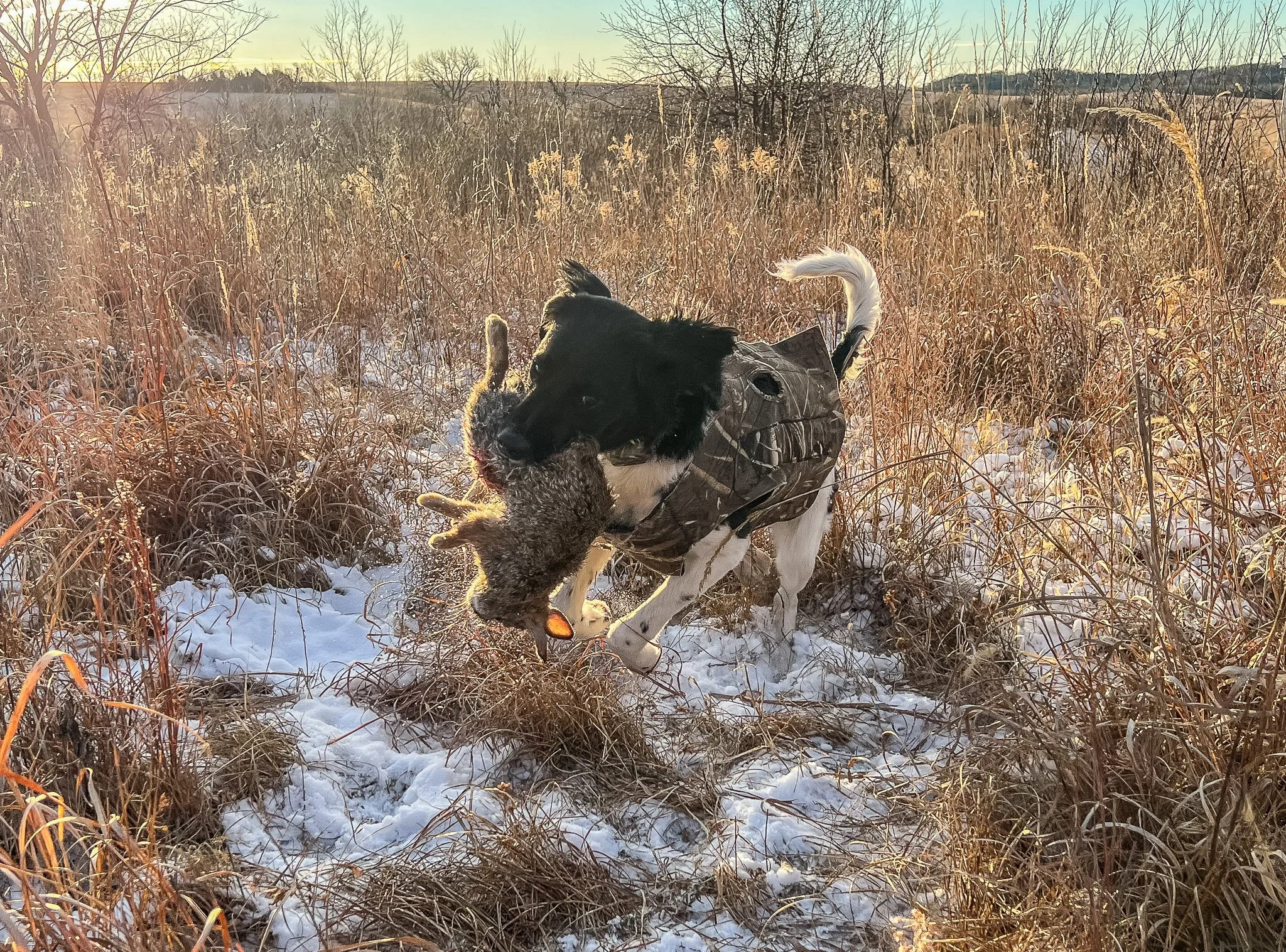
Aldo retrieving a rabbit. At just nine months old, he was already showing the makings of a truly versatile hunting dog - strong prey drive, reliable recall, and a natural retrieve to hand, whether feather or fur.
For a few hours, we pin-balled our way from thicket to thicket until the maze of cottontail tracks became a tangle. As we rounded toward the truck, Aldo caught the scent of one more rabbit and the chase culminated at the base of a juniper. As I approached, my thumb hovering over the shotgun’s safety, I braced for the inevitable flash of a cottontail - and then a sharp yelp from Aldo broke my concentration.
Aldo has always been a vocal dog. Visitors to our home can attest to his varying intonations of a warbling “ya-owwe.” There’s a call and response format to it that makes many feel like they just might be having a conversation, an actual dialogue, with my dog. Interestingly enough, when tracking a game bird, Aldo is ruthlessly silent. His pursuit of a downed bird, however, is often accompanied by a high-pitched war cry and most successful retrieves are followed by a series of barks mixed with a victory roll in the grass.
I tell myself that he’s just got a lot to say sometimes but the yelp from the juniper… this was different. Something was wrong.
I found Aldo pawing at his eye, no longer interested in whatever had lead him to that juniper in the first place. I set my gun down and took a closer look at Aldo, but as far as I could tell, he was fine.
We had a few rabbits in the bag and the morning nearly behind us. Alexis had been firm about preparing Christmas dinner in peace, but it was time for us to head back. This was our first Christmas in our first home; surely a “honey-do” list had sprouted since our dismissal earlier this morning. I gave Aldo another once-over on the tailgate before kenneling him, everything seemingly in order. Before turning home, I grabbed a folding saw from the back seat and took a few limbs from that last juniper. The plush green needles and dark berries carried a sharp scent; they would make for a small, wild contribution to my wife’s holiday table.
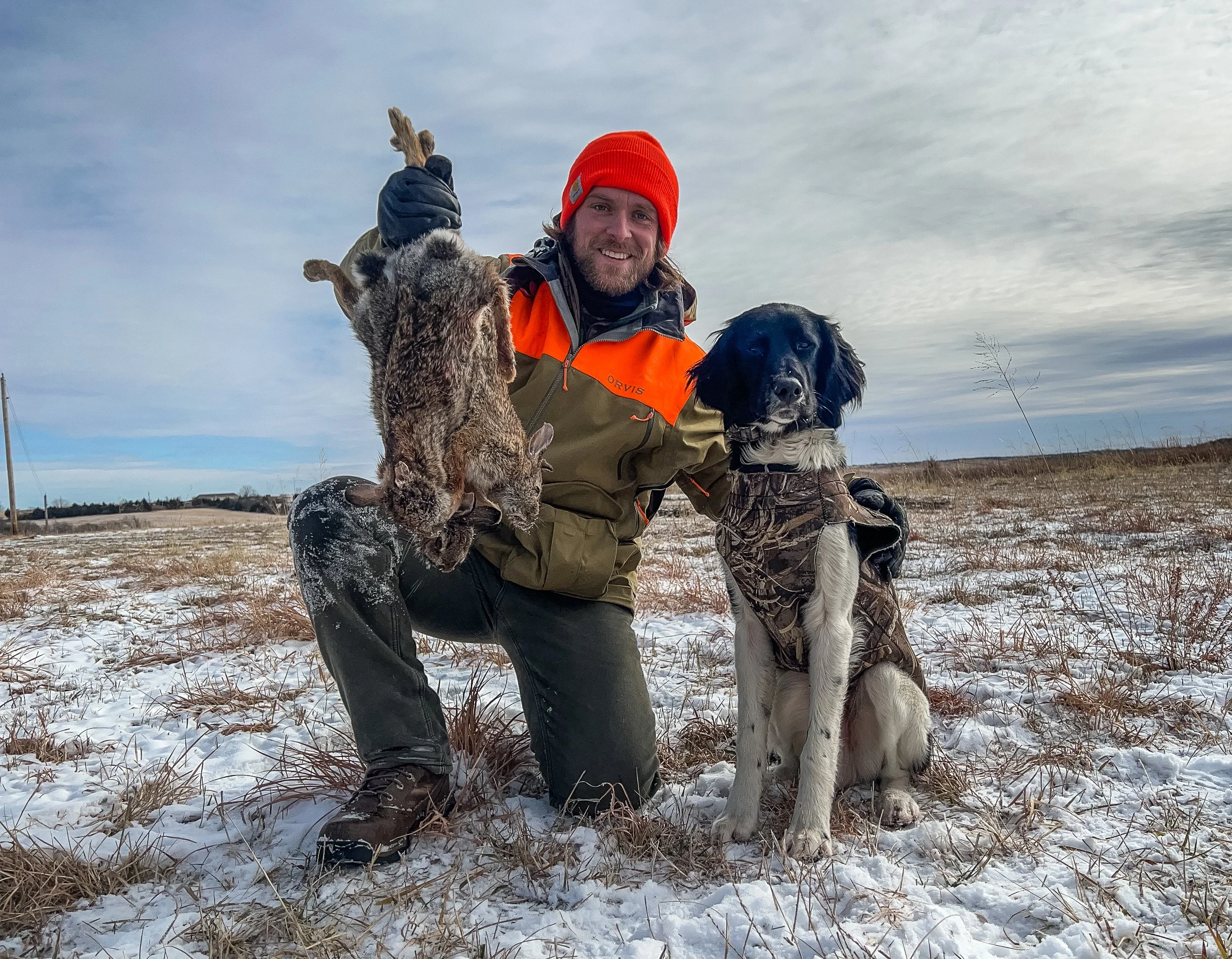
Aldo and I with our Christmas Eve ‘22 rabbits. This was the hunt that Aldo sustained his eye injury.
Back home and cleaned up, we welcomed our family into our home and enjoyed a beautiful meal together. Aldo gave a tempered greeting to our guests but I didn’t think much of it, I figured he was spent from the morning’s hunt. He was only nine months old and his energy seemed to come and go in waves. His calmer demeanor, and inclination to rest instead of investigate counter tops, felt normal.
Until I realized it wasn’t.
By the time we had returned from Christmas Eve church service, it was clear that something was wrong. Aldo’s light had gone dim and an angry pink tissue had bloomed near the corner of his right eye’s tear duct.
Against the backdrop of the glowing Douglas Fir, Alexis and I weighed the options. The cost of a late-night, Christmas Eve emergency veterinarian visit would surely be staggering. We both agreed a visit to Dr. Mike was in order, but the question hung in the holiday air: could Aldo wait until December 26?
To this day, I am reminded of our decision each morning when he climbs out of his kennel. I pull him into my arms, scratch behind his ears and rub his belly - and then look deep into his one, soulful eye.
By December 26th, Aldo’s injury had evolved into an alarming and grotesque picture. His right eye was nearly swollen shut and the skin on that side of his face was stretched down beneath his jaw. What little Christmas cheer was in our home had completely dissipated.
A viscous, clear liquid oozed from the eye. Strings of drool hung from his jaw with every labored breath. He refused food, ignored water, and struggled just to find his feet. The vibrant nine-month-old puppy from the juniper thicket was gone, replaced by a dog fighting a battle we didn't yet understand.
Lesson 1: Life, Limb, or Eyesight
When I was a combat medic, we triaged “Urgent” with the rule of thumb: Life, Limb, or Eyesight. I should have applied this same methodology to Aldo on Christmas Eve. I recognize that there are significant financial implications with holiday, emergency veterinarian visits, and it would have strained our family’s finances at the time, but if I go could back in time, I would have taken Aldo to the vet immediately.
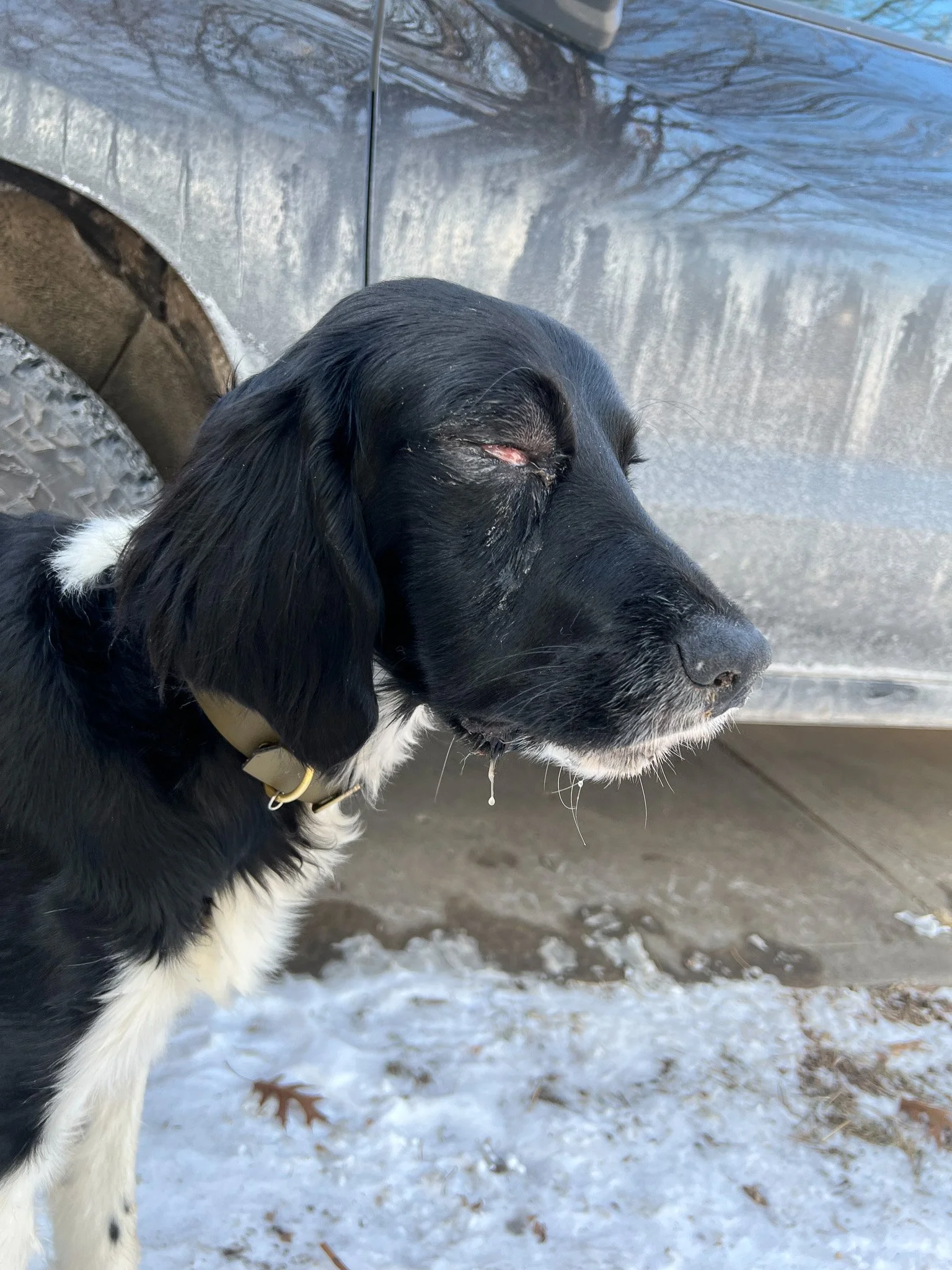
Within a day, Aldo’s eye had swollen shut and he struggled to eat and drink.
The first visit to the vet resulted in a round of antibiotics that seemed to provide reprieve. Within a day, swelling receded and Aldo’s appetite returned. We shelved our worries, but only temporarily. The pink tissue near his tear duct - what I later learned was an inflamed third eyelid - was persistent. Aldo’s demeanor had improved, but as he continued to paw at his face, it was clear that the antibiotics were not the complete solution to the injury. At the referral of our vet, we made an appointment for a canine ophthalmologist.
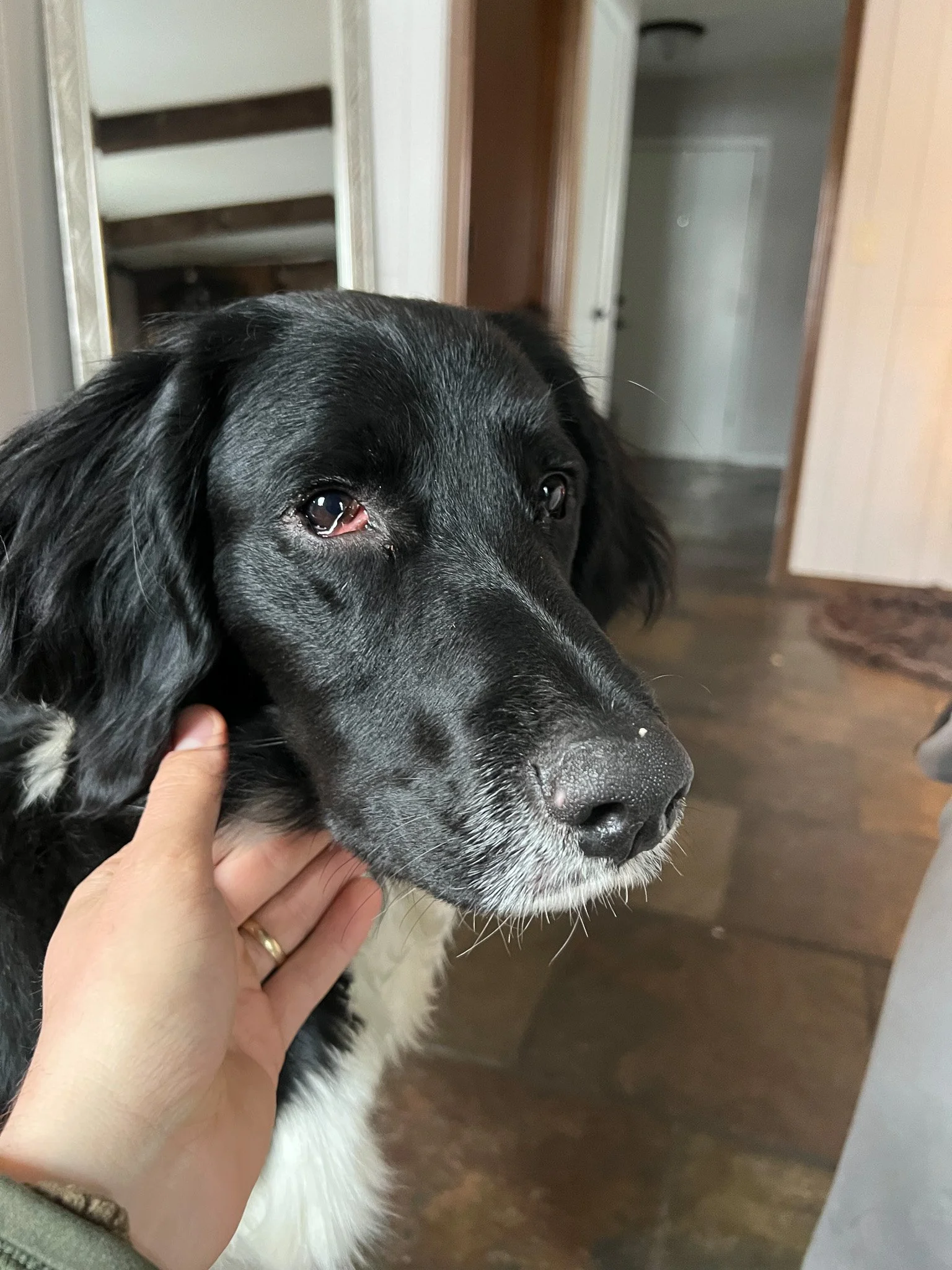
Aldo’s eye, after a round of antibiotics that treated the infection from his injury, with an inflamed third eyelid.
We quickly learned that specialized care comes with a specialized price tag. The first surgery to “pin” the third eyelid back in place cost us $3,000 - a staggering figure and the highest veterinary bill I had swallowed to date. But as I looked at that nine-month-old pup, the choice wasn't a choice at all. If it came down to it, I would have sold my truck to help my dog.
And I still would.
The canine ophthalmologist warned me that Aldo’s injured eye may be permanently non-visual, but it was too early to be certain. As Aldo recovered, I found myself obsessed with finding a way to prevent this from ever happening again. He wasn’t the first dog to sustain an eye injury in the field, and he certainly wouldn't be the last, but I was determined to make sure he was the last one in my kennel to go through it. That’s how I found Rex Specs.
Rex Specs are high-performance goggles for dogs or, as I like to call them, “doggles.” They are used by everyone from military working dogs jumping out of planes to snowboarding companions, and they seemed like the only real line of defense against the seeds, burrs, and twigs a versatile hunting dog encounters on a daily basis. I didn’t know anyone (in fact, I still don’t) that has had any experience with these, but with multiple sizes and interchangeable lenses, I thought they were worth the gamble. I would try just about anything to mitigate another injury.
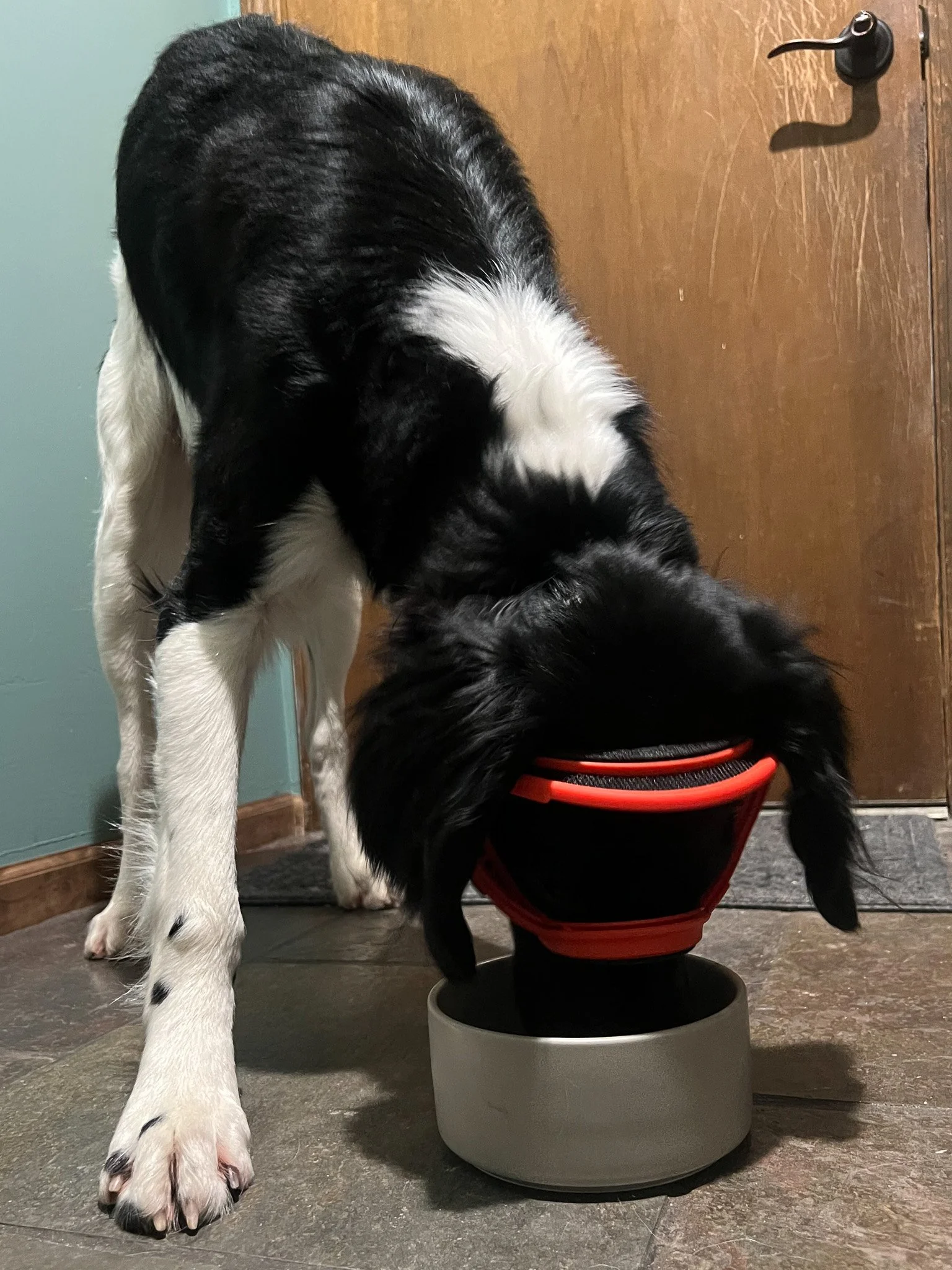
Getting Aldo to wear the goggles took quite a bit of patience. One of the steps I took was putting his goggles on when it was time to eat and taking the food away as soon as he started pawing at his goggles.
The goggles took some getting used to. Aldo didn’t want to wear them (he still doesn’t). I can’t blame him; I remember the defiance I felt when my mother insisted I wear a helmet just to ride a bike. Decades later, as I stood over my dog, I developed a newfound appreciation for what she was trying to accomplish.
I started by letting Aldo inspect the frames, then introduced them without the lenses to remove any visual barrier. I used meal times as the ultimate leverage: if he wanted to eat, he had to wear the "doggles." The routine was simple but firm: food down, goggles on. If he pawed at his face, the bowl disappeared. It only took a few iterations before the dots connected.
Adding the lenses brought a new degree of frustration, but he adapted within days. Rex Specs offers clear, tinted, and mirrored options. While the mirrored lenses provide a certain "razzle-dazzle" flair, they didn't quite fit our utilitarian field aesthetic. We settled on a system: clear for the gray mornings, and a quick swap to tinted during a water break once the sun broke through the clouds.
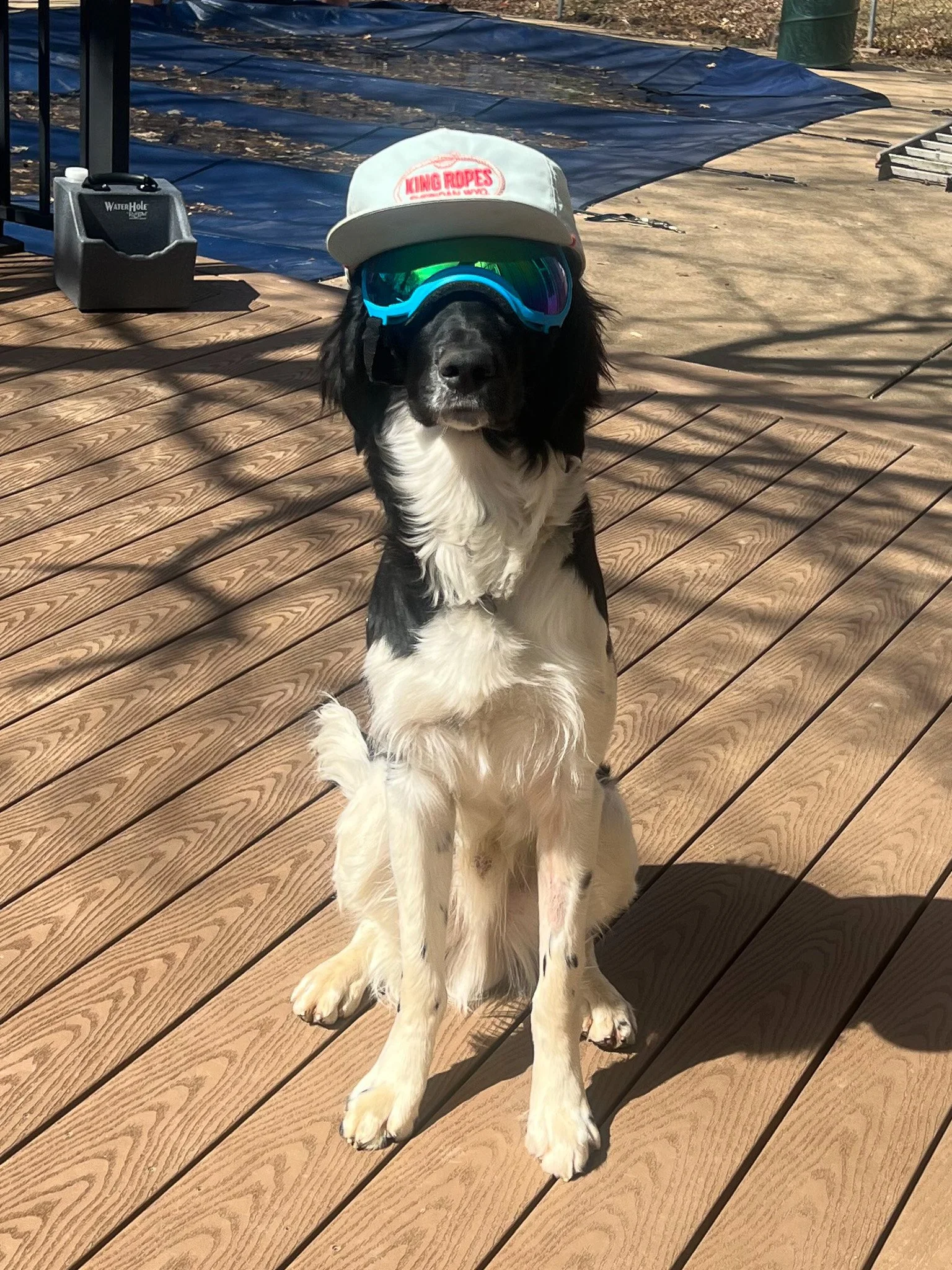
Ever seen a dog look this cool? Mr. Steal-yo-Girl.
I made the mistake of letting Aldo out on the driveway with his goggles on when we were still pretty early in the goggle familiarization / adaptation phase. He immediately took to dragging his face along the concrete in an attempt to shed the goggles, effectively sanding the lenses from transparent to translucent in seconds. It was an expensive mistake, and one I’ll take to heart with the next dog.
The lenses are a durable plastic that has 99.9% UVA/UVB protection, but they aren’t indestructible. Even after a single field, a fresh lens will start to show scratches. Seeing those scratches, the physical evidence of seeds, burrs, and twigs that didn't hit his eye, made me realize just how much "junk" a hunting dog’s face survives every day.
The frames themselves are a rugged, flexible plastic that allows the lenses to be swapped with relative ease. After several years in the field, I’ve found that a fresh set of lenses will usually survive a weekend hunt, while the frames themselves are built to last for years. Now, I never travel without spares. I carry several sets of lenses on long trips and a backup pair of goggles just in case. As I learned in the Army: Two is one, and one is none.
Lesson II: Proactive, not Reactive
I wish I had known about Rex Specs sooner and that I better understood the inherent that risk versatile hunting dogs encounter every trip afield. To some, putting goggles on a dog may feel frivolous or "over-the-top," but after this experience, I’ve decided that every hunting dog in my kennel will wear goggles afield to mitigate injuries.
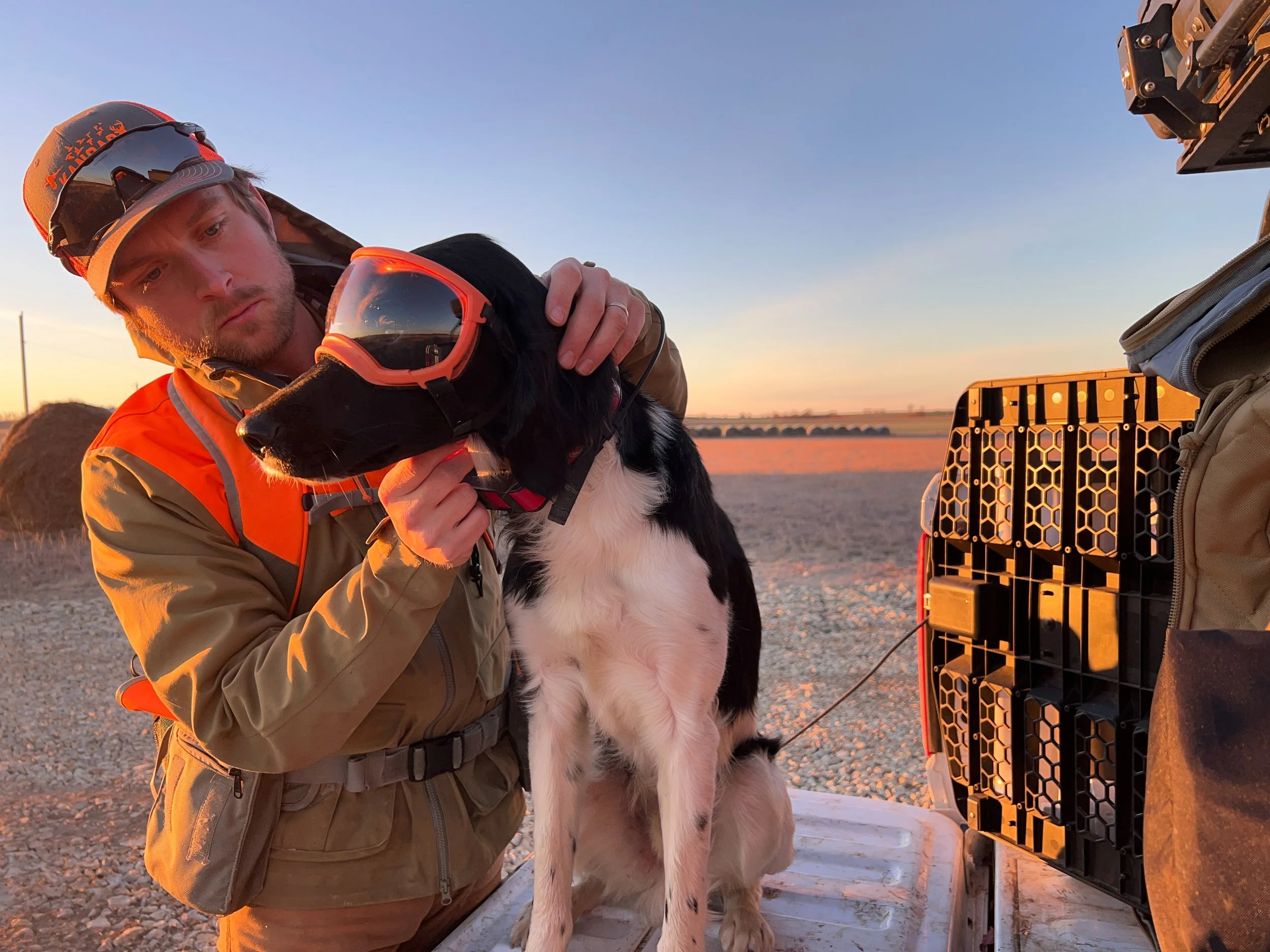
Adjusting Aldo’s Rex Specs protective goggles. Much to his frustration, I don’t let him leave the tailgate without his goggles.
As Aldo entered adulthood, the reality of his injury finally came into focus. I noticed small, tell-tale signs: the right side of his goggles (the side of the injured eye) was always scratched and battered much faster than the left. At home, he would occasionally clip the doorframe or whack his head when taking a sharp corner to the right.
A follow-up with the specialist confirmed our fears: Aldo’s right eye was non-visual. More than that, the orb itself had stopped growing. The theory was that the massive swelling from the initial infection had essentially crushed the optic nerves; while the eye remained living tissue, it had lost both its function and its ability to keep pace with the rest of his growing body.
We once again faced the weight of surgery: to remove the damaged eye, or leave it.
For two years, Aldo remained a two-eyed dog, navigating the world with a "blind side" and a growing collection of scratched Rex Specs lenses. As time passed, and despite diligently flushing his eyes on the tailgate before and after every hunt or training session, the non-visual eye became a persistent vulnerability.
I began to notice an alarming trend: Aldo periodically developed eye infections that required more and more rounds of antibiotics. And, if that wasn’t enough, he twice developed large, painful cysts in his neck and lower jaw; one of which required surgery. While I can’t prove the connection with absolute certainty, I wonder if these subsequent ailments were all connected to his eye. Because the non-visual eye had stopped growing at nine months, when his skull reached its full adult size, there was an unnatural "gap" in the socket. This extra space acted like a catch-all for the very things I was trying to protect him from: seeds, dust, and microscopic debris that could migrate deep into his tissue.
It became clear. His vision was not returning and we were simply maintaining a liability. It was time to remove his non-visual eye.
Lesson III: Surgery May be Optimal
Even though we knew the eye was non-visual, the thought of removing it made me cringe. How could I do that to my dog? How could I alter that young, handsome face? There was also the lingering, irrational hope that he might miraculously recover and one day, maybe, his full vision would be restored.
By delaying the inevitable, I unknowingly subjected Aldo to years of recurring infections and thousands of dollars in "maintenance" costs from the endless antibiotics to surgeries for the cysts in his neck. I eventually realized that I wasn't keeping the eye for Aldo; I was keeping it for me. Looking back, I should have authorized the surgery the moment we confirmed the loss of sight.
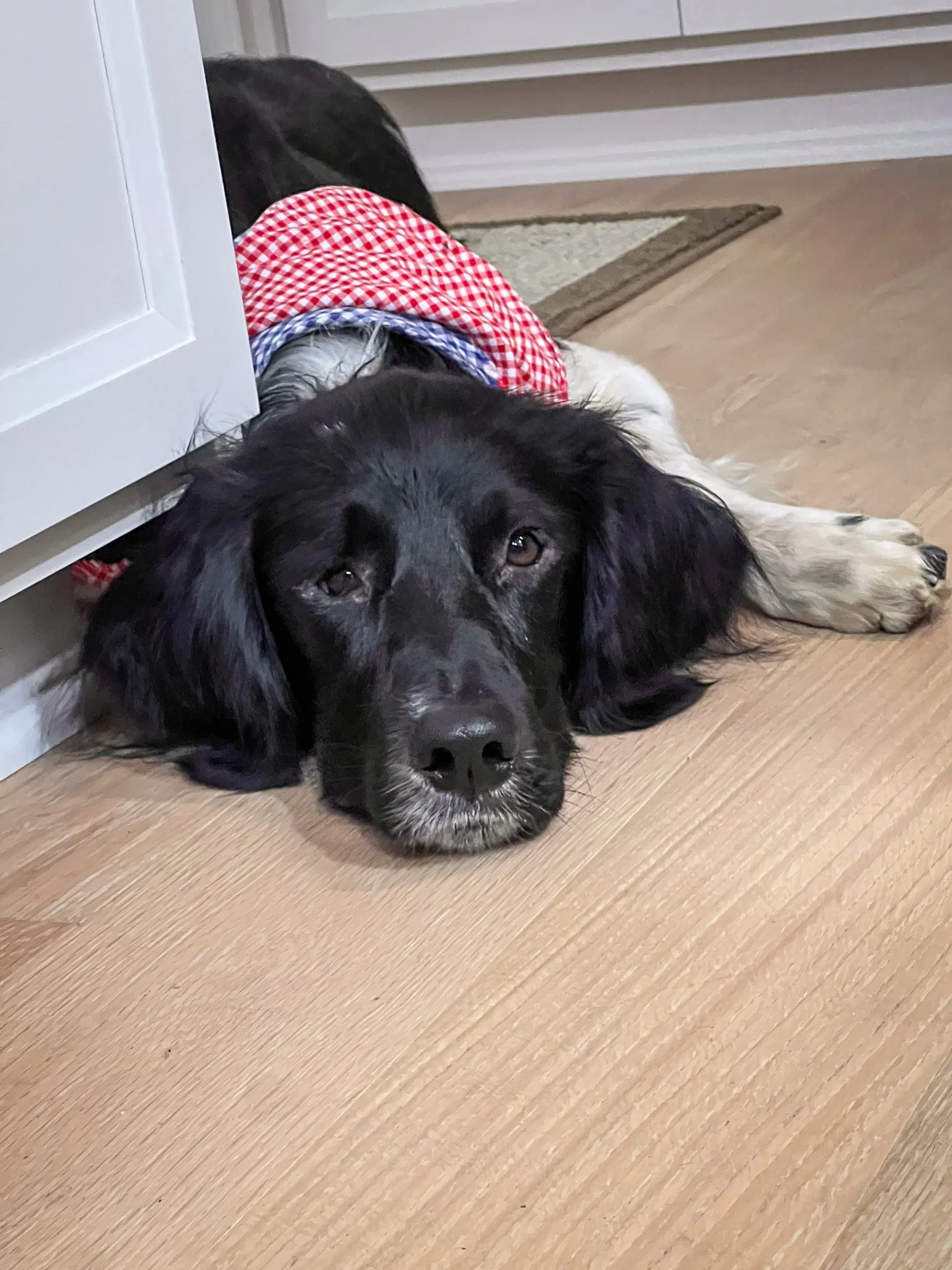
Look closely and the asymmetry becomes clear. Aldo’s right eye stopped growing at nine months old, a permanent reminder of the Christmas Eve 2022 injury.
Looking back through the stack of veterinarian receipts, that Christmas Eve decision adds up. I estimate this journey cost us roughly $7,500 - a figure that represents not just surgeries, but the price of my own hesitation.
Initial visits and antibiotics: $500
Ophthalmologist visits and “pinning” surgery: $3,000
Recurrent infections and antibiotics: $1,000
Cyst removals and specialized jaw care: $1,500
Final enucleation (eye removal): $1,500
There is a haunting probability that if I had prioritized his eyesight over the holiday finances and the convenience of a quiet Christmas... Aldo would still see the world the way God intended. If I had simply acted 48 hours sooner, he might still have the full, vibrant vision he was born with.
Every time I adjust his goggles on a tailgate, or watch him misjudge a corner and clip a doorframe, I am reminded of the time I let slip away. It is a quiet, persistent guilt: a realization that in the field, a dog’s safety is entirely dependent on their handler’s decisiveness.
He had his eye removed in September 2025 and as of writing this in March 2026, this is the longest span of time since that Christmas that Aldo has gone without an eye infection.
We have traveled thousands of miles together over the years, from the high plains of Montana and Wyoming to the thickets of Oklahoma and New Mexico, and across the heartland of Iowa, Kansas, Nebraska, and South Dakota. Whether it’s waterfowl, small game, or upland birds, Aldo meets every challenge with 50% of the vision and 200% of the heart.
He may only have one soulful eye to look back at me with, but as long as I’m the one holding the shotgun, I’ll make sure it’s the only one he ever needs.
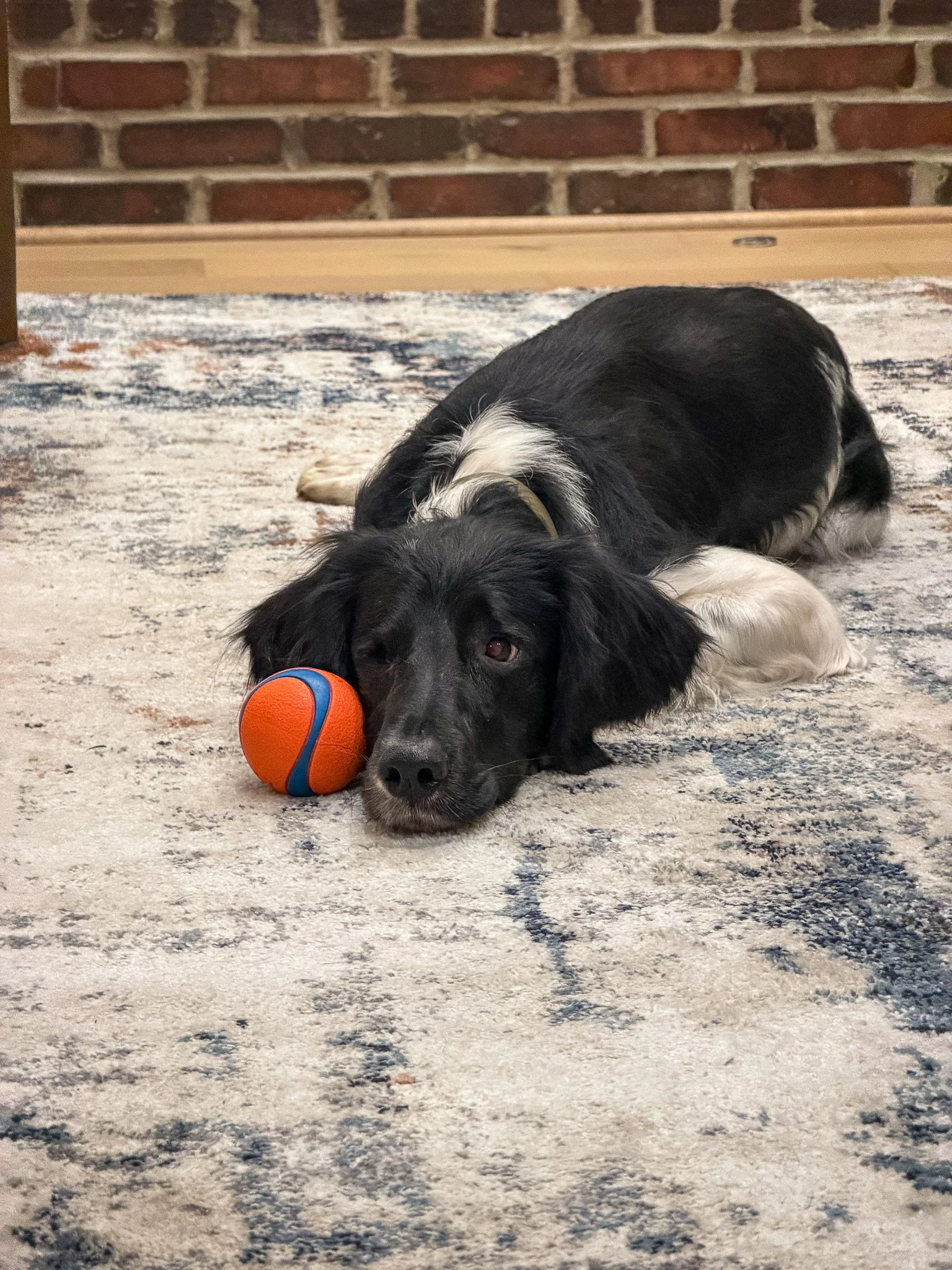
Here is a clear view of Aldo with his one eye, two years after his injury and fully recovered from his third eye surgery.
“Life can only be understood backwards; but it must be lived forwards.”