A GDY Morning Routine on the Road
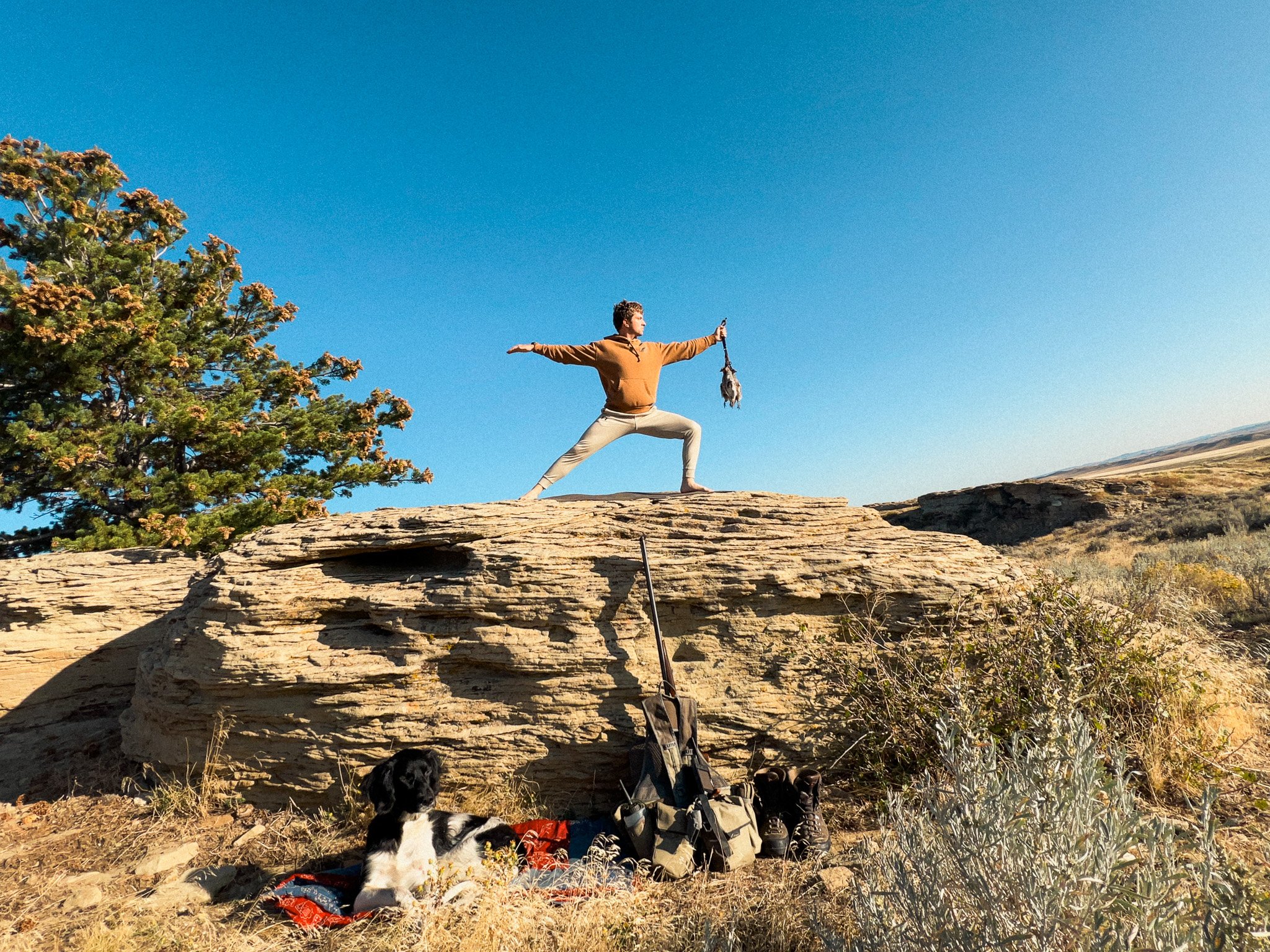
Aldo patiently waits to start hunting while I do my morning yoga routine.
A covey of huns, a few hundred yards to the west, soared with the day’s first light. I couldn’t have timed it any better if I tried. I had hopped off my roof top tent’s ladder just in time to catch the the flight before those partridges dipped down out of sight. If I was elk hunting, I’d feel compelled to get moving right away, but these were birds. Beautiful, wily, sporting birds and I had all day to locate wherever they dropped down to. Bingo, I said under my breath and ripped a big grin.
Aldo’s head popped out of the tent overhead. His ears dangled as he gazed over me and up the spur we were parked on in a remote expanse of central Wyoming BLM. My hoody was barely enough to bite the chill but I didn’t bother grabbing a jacket. I wouldn’t need either for much longer. September bird hunts often start cool but end warm (sometimes, too warm).
I brushed my teeth, downed a Nalgene of water mixed with electrolyte powder, and withdrew Aldo from his perch. We took a short walk into the sun to knock off the morning chill and let Aldo take care of his morning business without risk of catching any scent and starting the hunt sooner than planned. Back at camp, I floated a light breakfast for Aldo and rolled out my yoga mat.
Twenty minutes later, my joints and muscles thanking me, I lit the Jetboil. While the water boiled, I dug out coffee grounds, apples, whole wheat crackers, and a fresh package of homemade elk salami. I’d like to think Aldo didn’t wander off from camp because he knows better, but the smell of elk salami might be a better explanation for his behavior.
I dressed for the task at hand once breakfast was complete and boiled water for another cup of coffee while I ran through the checklist for the day. Pre Combat Checks & Inspections - well, pre-hunt checks. Some things just don’t dissipate after ten years in the army.
Water bottles in my vest topped off.
Ear and eye protection on me.
Deer jerky and chewing gum in my vest.
A box of shells in the vest, and another, just in case it’s that kind of day.
Shotgun - barrels clear, with the right chokes.
Small first aid kit on my vest.
Dog collar, connected and charged.
Dog collar handheld, connected and charged.
Phone with map downloaded, charged.
I put my vest on and gave Aldo the command to hop up on the tailgate. “Aldo, load!” I ran my hands over his coat and picked up each paw. I checked his eye and gave him a rub behind the ears before putting his collar and goggles on. I polished off my coffee, gave one last look over camp, and released Aldo from the tailgate. We set a course for where I thought those partridge had set down and I grinned. What a wonderful, beautiful day this is.

A pair of Hungarian partridge nestle my 28 gauge CZ Sharptail.
We found the covey about thirty minutes into our hunt and spent the next several hours chasing them from draw to draw. Side stepping, climbing up and then down. Searching, and then Aldo on point, a shot or two from me, and sometimes a retrieve. Then climbing up and out of the draw and down into the next. For hours, we were consumed by the task at hand, enamored by the beauty before us, and thrilled by the chase.
I share this story to highlight my morning routine when I’m on the road. Years ago, I likely would have chased after that covey at first light, but I’ve learned that the birds will be there, or they won’t. Now, I take my time in the morning to make sure I’m fully prepared for the day. This means taking care of myself and my dog, because we don’t just want to hunt today. We want to hunt as many days as possible, for as many years as possible.
Below I’ve listed out what this routine looks like. I’ve even included a quick yoga routine, too. I’ve also compiled all of this into a print-friendly PDF that you can download from here.
Sequence
Hydrate Start the morning first thing with a tall glass of water mixed with electrolytes. This will mitigate fatigue and cramping later in the day.
Take the dog for a walk Wherever you are - bird camp, motel, or at home - start the day with a short walk to get your (and your dog’s) blood flowing.
20 minutes of yoga Stiff, sore, tired. These are all commonplace in bird camp but they don’t have to be. Boosting mobility and preventing injury, the 20-minute yoga routine down the page is tailored to the bird hunter that’s on the go - and wants to keep going for years.
Fuel up Find a balance of protein, complex carbs, and healthy fats to fuel your body for the day. Eggs, greek yogurt, almonds, fruit, and sugar-free oatmeal are all great examples.
Buddy check You’ve now taken steps to prepare yourself for the day. Now it’s time to check in with your hunting partners (human and canine alike) and make sure everyone is ready for the adventure at hand.
“Bird Hunter on the Go”
This 20-minute routine is designed to be conducted anywhere - bird camp, motel room, or at home - with no equipment. Please recognize that you should immediately stop should you, at any time, feel pain. There is a distinct difference from pain to discomfort to feeling “tight” but only you can make that decision.
The sequence of these poses is intentional but feel free to modify to meet your needs. And, don’t forget, showing up to do this is far more important than doing every pose “perfectly.” What matters is that you made the effort to prepare yourself for a day of thicket stomping, boulder hopping, and wingshooting. With enough time and repetition, this routine, and these poses, will become more comfortable and rewarding.
Hero Pose with Box Breathing - begin the practice in Hero’s Pose, also known as virasana. This pose stretches the quadriceps, knees, ankles, groin, and psoas muscles. Once situated, go through three sequences of box breathing. If you’ve never done box breathing, start with two second increments. 1) Inhale for two seconds 2) now hold your inhale for two seconds 3) exhale for two seconds 4) now hold the exhale for two seconds and lastly, 5) repeat. Go through this cycle three times. As you become more comfortable with this, you can begin increasing your increments but make sure each side of the “box” - inhale, hold, exhale, hold - are all maintained for equal duration.
Tabletop with Wrist Warm Up - transition off your ankles and over to tabletop so that your shoulders are over your wrists, your hips over your knees and you have a neutral spine. Begin rocking forward and back, then side to side, and then move your hands to various positions (fingers pointing away, fingers pointing out, fingers pointing in).
Cat / Cow - reposition your hands to a neutral position, fingers forward and wrists under your shoulder. With your inhale, let your belly drop to the ground arching your back gently; gaze slightly up as your tailbone and chest both lift upward. With your exhale, find the inverse of your position by pulling your belly into your spine, tucking your tailbone, and rounding your back as your head drops gently.
Child’s Pose - transition to a neutral, tabletop position and then bring your toes together and widen your knees. Sink your hips back towards your heels, reach forward with your hands, and rest your head on the mat.
Downward Dog - begin to exhale, lifting your hips and tucking your toes under your feet. As you inhale, press through your hands, lift your knees off the mat, and lift your hips to the sky. Peddle your feet slowly for a moment, creating a slight bend behind each knee, before coming to a static hold as your ears are in line with your biceps, your heels are reaching to touch the mat, and your fingers are wide and gripping the mat. Remain here for five breaths.
Plank - as you exhale, slowly glide your body from the inverted “V” of downward dog down to the plank position where your wrists are under your shoulders and your body is in a generally straight line; you may need to slightly adjust your hands or feet to achieve this. Over time you will begin to naturally execute your downward dog pose in a manner that allows you to transition to plank without moving hands or feet.
Cobra - lower your body, as a single unit, down to the mat until your belly and all of your body is resting on the floor. With hands under shoulders and elbows hugging your ribs, lift your chest while keeping your pelvis glued to the floor; gaze forward or slightly up.
Child’s Pose - return your body to a neutral position with your chest back on the floor. Tuck your toes and push from your hands to glide your hips back while opening your knees. Once your hips are back, over your heels, rest your head on the mat with your arms extended.
Downward Dog - begin to exhale, lifting your hips and tucking your toes under your feet. As you inhale, press through your hands, lift your knees off the mat, and lift your hips to the sky. Peddle your feet slowly for a moment, creating a slight bend behind each knee, before coming to a static hold as your ears are in line with your biceps, your heels are reaching to touch the mat, and your fingers are wide and gripping the mat. Remain here for five breaths.
Low Lunge (L) - lift your left leg, as if to push up and back into the wall behind you, while still in the downward dog position. From here, drive your left knee forward, under your body, and plant your left foot firmly between your hands. Now drop your right knee to the mat, toes curled or the top of your right foot on the mat, and lift your chest and head upright over your pelvis. Relax your hands on the top of your left thigh, or, for a deeper stretch, reach your hands straight up in the air.
Warrior 2 (R) - Curl your right toes under and lift your right knee off the mat. Turn your right foot so that it is perpendicular to the mat’s edge, facing out from your body, and open your hips to the right side of the mat. Windmill your arms so that your left arm reaches to the front of the mat and your right arm reaches to the back, both arms creating a straight line with your shoulders and parallel to the mat. Gaze, with a big, open chest, out and over your left hand.
High Lunge (L) - Windmill your arms back down to the mat while simultaneously turning your hips, and your right foot, back to center, returning to your lunge position - this time, your right knee remains flexed and above the mat (the difference between high and low lunge is the knee resting on the floor).
Plank - as you exhale, return your left leg to the rear of the mat so that you are back in the plank position where your wrists are under your shoulders and your body is in a generally straight line; you may need to slightly adjust your hands or feet to achieve this. Over time you will begin to naturally execute your downward dog pose in a manner that allows you to transition to plank without moving hands or feet.
Cobra or Upward Dog - lower your body, as a single unit, from the plank position down to the mat until your belly and all of your body is resting on the floor. With hands under shoulders and elbows hugging your ribs, lift your chest while keeping your pelvis glued to the floor; gaze forward or slightly up. If you’re looking for a deeper sensation than Cobra, push your hips into the floor and extend your arms under your shoulders so that the only parts of your body that are touching that mat are the tops of your feet and the palms of your hands.
Downward Dog - in a single, smooth, rolling motion, pick your hips up and drive them to the ceiling. While you are moving to create this inverted “V” shape, roll off the tops of your feet so that your toes are back to gripping the mat, the soles of your feet are pushing into the mat, and your heels are reaching to touch the floor.
Low Lunge (R) - lift your right leg, as if to push up and back into the wall behind you, while still in the downward dog position. From here, drive your right knee forward, under your body, and plant your right foot firmly between your hands. Now drop your left knee to the mat, toes curled or the top of your right foot on the mat, and lift your chest and head upright over your pelvis. Relax your hands on the top of your right thigh, or, for a deeper stretch, reach your hands straight up in the air.
Warrior 2 (L) - Curl your left toes under and lift your left knee off the mat. Turn your left foot so that it is perpendicular to the mat’s edge, facing out from your body, and open your hips to the left side of the mat. Windmill your arms so that your right arm reaches to the front of the mat and your left arm reaches to the back, both arms creating a straight line with your shoulders and parallel to the mat. Gaze, with a big, open chest, out and over your right hand.
High Lunge (R) - Windmill your arms back down to the mat while simultaneously turning your hips, and your left foot, back to center, returning to your lunge position - this time, your left knee remains flexed and above the mat (the difference between high and low lunge is the knee resting on the floor).
Plank Plank - as you exhale, return your right leg to the rear of the mat so that you are back in the plank position where your wrists are under your shoulders and your body is in a generally straight line; you may need to slightly adjust your hands or feet to achieve this. Over time you will begin to naturally execute your downward dog pose in a manner that allows you to transition to plank without moving hands or feet.
Upward Dog - lower your body, as a single unit, from the plank position while simultaneously rolling your ankles so that the tops of your feet are pushing against the mat. With hands under shoulders and elbows hugging your ribs, lift your chest so that the only parts of your body that are touching that mat are the tops of your feet and the palms of your hands; gaze forward or slightly up.
Downward Dog - in a single, smooth, rolling motion, pick your hips up and drive them to the ceiling. While you are moving to create this inverted “V” shape, roll off the tops of your feet so that your toes are back to gripping the mat, the soles of your feet are pushing into the mat, and your heels are reaching to touch the floor.
Mountain - step, hop, or float your feet up to meet your hands so that your body is bent at the waist. Slowly, as if pulling your body upright one vertebrae at a time, like a roll top desk, until you are standing upright. Take five deep breaths. Think about the first flush of the day. The rooster’s cackle. The chukar’s chuckle. Your dog, steady as a rock, and your aim as true as any…
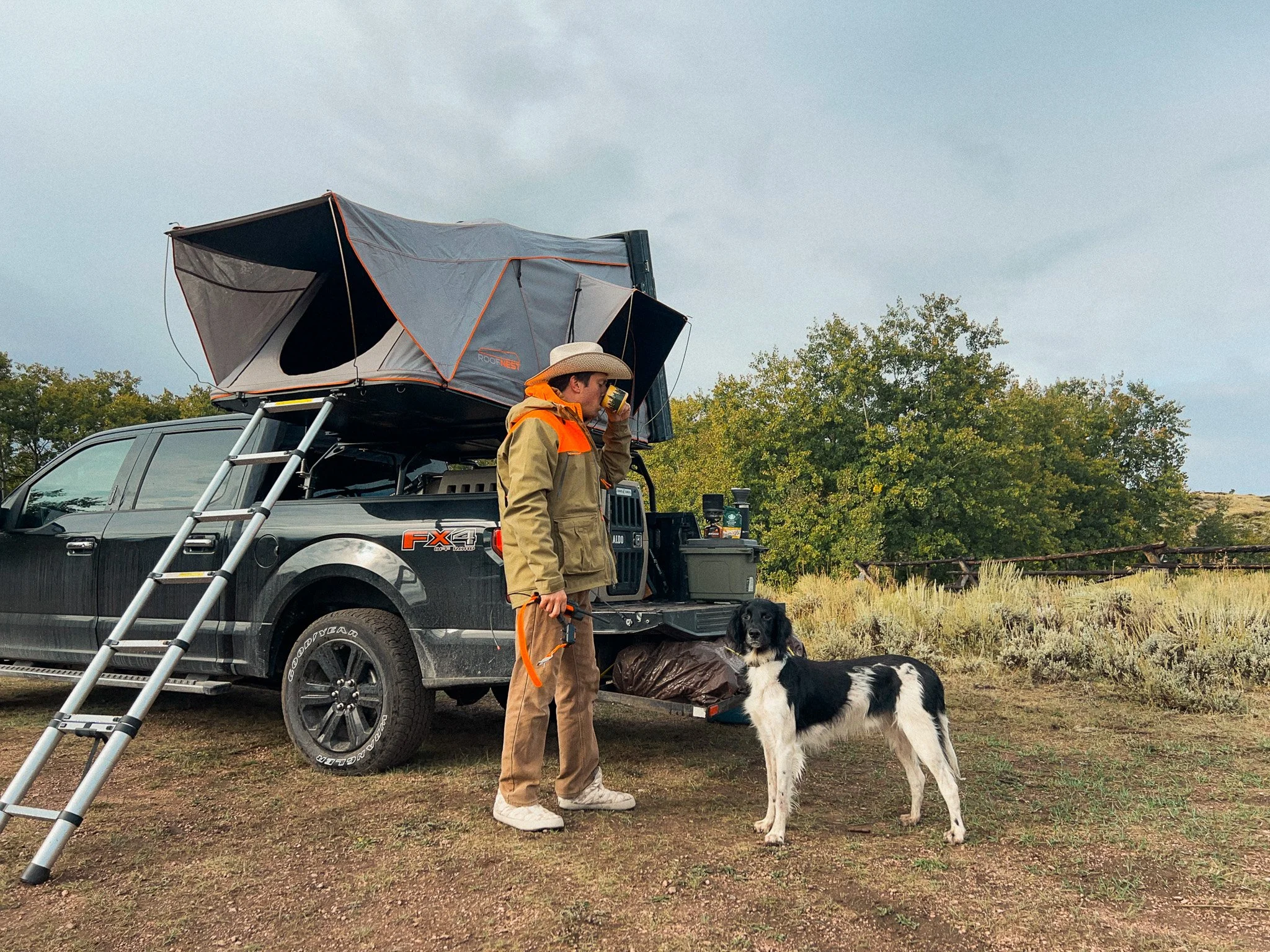
Aldo, waiting on me to finish my coffee, so we can start hunting!